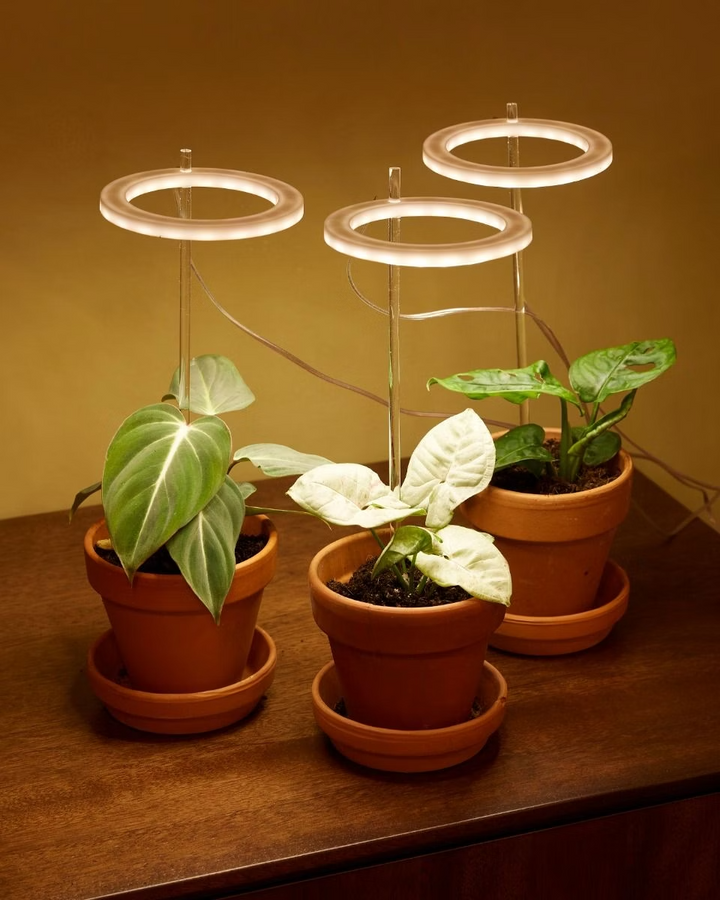
Grow Light Rings
5.750 KD
Plant care guide
A window direction is only the starting point. Distance from glass, shade, season and reflected heat determine what the leaves actually receive.

Wide spacing between leaves, weak growth or leaning can mean too little light. Bleached patches, crisp areas and sudden yellowing after a move can mean too much. Variegated plants usually need brighter filtered light but their pale tissue burns sooner.
Indoor leaves are adapted to relatively low light. Start any outdoor move in full shade and increase exposure slowly over 10–14 days. Never take a plant straight from an interior room into direct sun.
From roughly November through February, sheltered outdoor areas can offer excellent bright shade and gentler daylight for many acclimated tropical foliage plants. Check the forecast: cold-sensitive plants should come inside when nights approach 10–15°C, and all tender foliage needs protection from strong north-westerly wind.
From late spring through summer, sunlight through glass can heat leaves and pots quickly. Pull plants back, use a sheer curtain and keep foliage away from the window itself. Wipe dust from leaves so the available light can be used efficiently.
A room that is simply too dim for a plant’s needs can be supplemented with a full-spectrum LED grow light rather than moved to a brighter but riskier spot. Position it above the canopy—roughly 30 to 60 cm away depending on the fixture’s output—and run it on a timer for about 12 to 14 hours a day rather than leaving it on around the clock; plants need darkness too. A grow light corrects intensity, not a plant’s fit for the room: a species that genuinely needs bright light still does better near a real window.
Still not sure what is wrong with your plant? Answer a few questions and get a diagnosis.
Ask the Plant DoctorFrom the NABAT shop
5.750 KD
Read more
Need advice for a specific plant? Start with its plant family and natural growing pattern.
Browse plant families